Copper water on the World Cup circuit: Team Carrick-Smith chooses Kopero
How Team Carrick-Smith chose Kopero copper water bottles, from their training base in Austria to the World Cup in Sölden.
Written and source-checked by the Kopero editors · Updated October 29, 2026

On 25 October 2026, nineteen-year-old Freddy Carrick-Smith started the season-opening giant slalom in Sölden with bib 46, climbed nine places in his second run and finished twelfth. It was the best result a British man has ever had in a World Cup giant slalom. At the start of that second run, in his hand: a hammered copper bottle.
In short
- Luca, Zak and Freddy Carrick-Smith race alpine skiing for Great Britain, coached by their parents Emma Carrick-Anderson and Phil Smith.
- Emma compared copper bottles, chose Kopero and asked us about working together.
- Kopero supplied the team with copper water bottles and a few other copper products.
- Freddy finished twelfth in Sölden on 25 October 2026, earning his first World Cup points.
- The bottles are independently tested for composition and food contact; the reports are in our test dossier.
A family that races together
Luca, Zak and Freddy Carrick-Smith are three brothers who race alpine skiing for Great Britain. Their mother, Emma Carrick-Anderson, skied at four Winter Olympics herself. Their father, Phil Smith, has coached alongside her since the boys first stood on skis. They travel the season as a small, self-run team, from the Austrian glaciers in autumn to races across Europe and Scandinavia through the winter.
The results have followed. Between them the brothers have won five Youth Olympic medals and two World Junior Championship medals, and two of them are ranked in the top three in the world for their age. Sölden was Freddy's first World Cup points, one year after making his debut on the same hill.

"I truly believe the water we drink has to be the purest we can get."
How we met
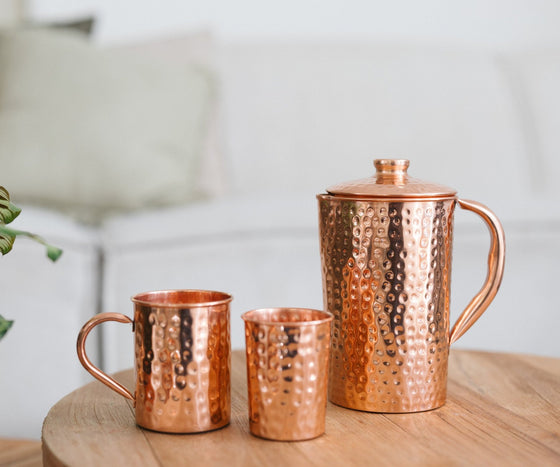
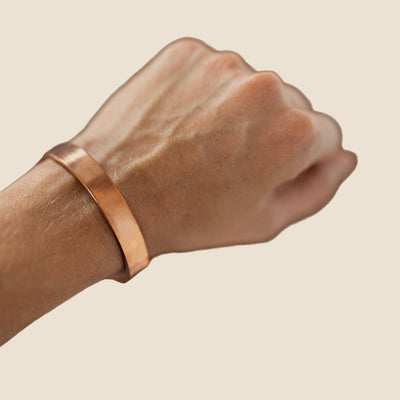
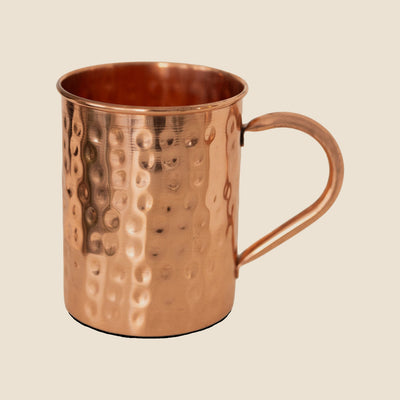
Emma had been reading about copper and wanted the whole team drinking from copper bottles. She compared what was on the market, chose Kopero, and wrote to us to ask whether we would consider working together. We said yes. A few days later five hammered bottles were on their way to the team's training base in Austria, along with a smooth bottle, two mugs and a few bracelets.
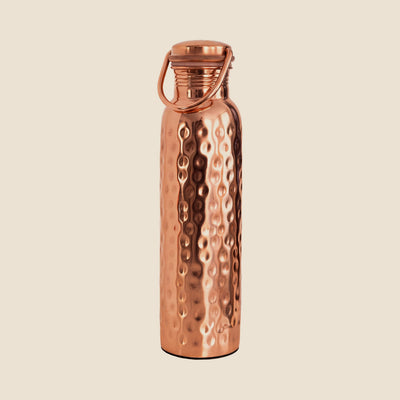
The hammered finish was Emma's choice. In her words, "they will probably take more hammering in our kit bags and still look good." The textured finish makes the small marks of a season on the road less noticeable.


"I looked for the purest, cleanest product and your bottles came up top."
Why copper water
Drinking water that has rested in copper is an old habit. In Ayurveda it has a name, tamra jal: fill a copper vessel in the evening, let the water stand overnight, drink it in the morning. For centuries that was tradition, and in the last twenty years the material has also been studied. Copper has natural antibacterial properties, and researchers have also studied its effect on bacteria in water stored in copper vessels. We write about that research at length elsewhere, with every source listed: is copper water healthy?; what the studies say per product.
For everyday use, the appeal is simple: solid copper, water in direct contact with the material, and an easy daily ritual. Fill it in the evening, close it, drink it the next day.
What is in a Kopero bottle
- Solid copper: 99.21% copper with 0.75% zinc, measured by RTC Laboratory. The zinc is a harmless residue from processing.
- Tested for food contact under the EU rules by URS, with nineteen heavy metals checked in the test water and none detected.
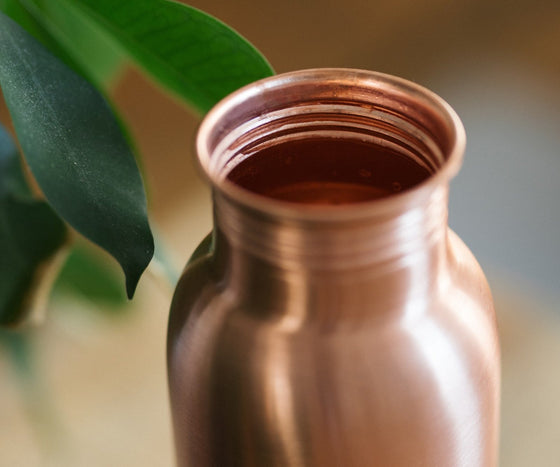
- Bare copper on the inside, where the water is. With use, the outside slowly develops its own patina.
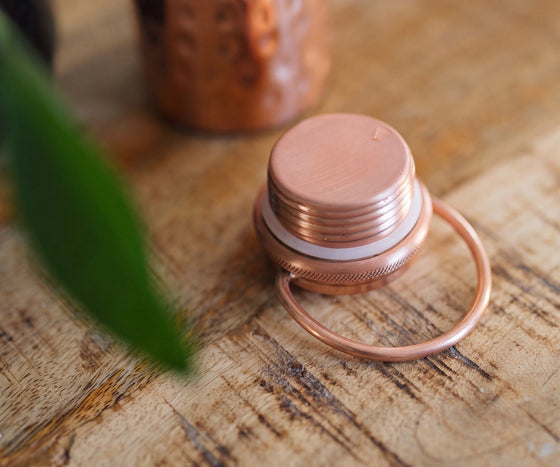
- Made from one piece of copper, with a copper cap and a leak-proof seal. About 900 millilitres, around 300 grams empty.
Explore the measurements and food-contact test results in our test dossier.

Copper on the road
A copper bottle asks for two things. Keep it to water: no sports drinks, juice or fizzy drinks, because acids react with bare copper. And rinse it with warm water after use, then leave it open to dry.


The outside will change. A hammered bottle that lives in a kit bag between Sölden and Levi will pick up marks and lose some of its shine. The marks stay, and in a hammered finish they are less noticeable. The shine you can bring back with lemon and salt (not too hard: salt is mildly abrasive and dissolves well in the lemon juice) whenever it fades, if you prefer the bright look over the patina. The care guide explains how, including why you let the salt dissolve first.
Follow the team
- @teamcarricksmith. The team account: results, training and travel.
- @lucacarricksmith · @zakcarricksmithski · @freddycarricksmith. Luca, Zak and Freddy.
- Team Carrick-Smith · Facebook. Longer race reports, including the one from Sölden.
- Team Carrick-Smith · YouTube. A film about the family and the road to the World Cup.
- GB Snowsport. GB Snowsport on the Sölden result: Britain's best ever World Cup GS result.
The team's Kopero kit
- Kopero copper water bottle. Hammered or smooth. The team chose hammered.
- Kopero copper mug. For water, coffee or tea. Not for acidic drinks.
- Kopero copper bracelet. Solid copper.